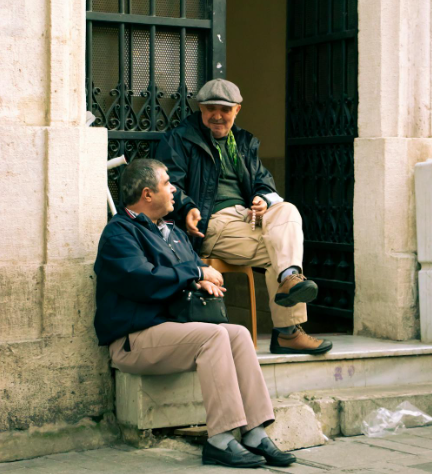
We recently posted an article on pastoral visitation making an excellent case for the importance of pastors knowing their people and maintaining meaningful contact with their congregation. I agree wholeheartedly with the practice of visitation and its value to ministry. However, when it comes to implementing any type of practice, we need to step back and consider some critical strategic questions first: What is our context? What’s our ministry philosophy? What are our core values? And what long-term outcomes are we actually trying to achieve?
In our Coaching Collective, we work with many different commercial businesses, not-for-profit enterprises, government departments, and Christian faith-based groups – from para-church organizations and denominations to local churches. This breadth of experience has taught us that there are vastly different values and cultures in which leaders work. What works brilliantly in one context can create significant problems in another.
When it comes to pastoral visitation specifically, there are important factors to consider that can either enhance or impede long-term ministry effectiveness. Let me be clear: I’m not suggesting that pastors should abdicate their shepherding responsibility. Rather, I want to highlight some unintended consequences that can emerge when pastors become the sole practitioners of pastoral visitation.
Three Strategic Concerns
1. Creating a Clergy/Laity Divide
When the pastor becomes the primary or exclusive pastoral visitor, we risk establishing a two-tier system foreign to the New Testament: paid professionals who do ministry, and everyone else who receives it. This dynamic creates dependency on the minister and diminishes the formation of obedient, mature disciples. Church members can inadvertently abdicate their responsibility to care for one another, assuming “that’s what we pay the pastor for.” Spiritual gifts that could be exercised in pastoral care become corralled inside Sunday morning services, limiting the body of Christ from functioning as God designed.
The question we must ask: Are we building a church culture where ministry is something done by the pastor, or where ministry flows through the entire body?
2. Establishing Limiting Assumptions Early
The philosophy of ministry we establish in a church’s early years creates cultural assumptions that are extremely difficult to change later. If we start a church with the pastor as the primary visitation practitioner – without regularly teaching the biblical foundation for shared pastoral care – we communicate a clear message: “This is the pastor’s job, not yours.”
The tragedy is that visitation could be one of the most effective opportunities for discipleship and leadership development. When we bring emerging leaders alongside us in pastoral care, we’re not just getting help with a task- we’re multiplying our ministry capacity and developing the next generation of shepherds. But if we’ve established the wrong cultural expectation from the beginning, introducing shared pastoral care later feels like the pastor is trying to offload an unwanted responsibility rather than inviting people into meaningful ministry.
3. Creating a Growth Barrier
Here’s a sobering statistic: if a church doesn’t plant another church within the first three years of its existence, it has a high likelihood of never multiplying. One of the foundations of church planting is the intentional multiplication of disciples and leaders.
When a church culture relies heavily on the pastor conducting pastoral visitation, it creates an unintentional barrier to multiplication. As the church grows, more visiting is needed. The pastor’s time becomes increasingly consumed with maintaining pastoral contact, leaving less capacity for leadership development. The very success of the church – numerical growth – becomes the constraint that limits its ability to multiply leaders and, eventually, to plant new churches.
The mathematics are straightforward: one pastor can only visit so many people. If visitation is the pastor’s domain, then the church’s capacity for pastoral care is capped by the pastor’s available hours. Growth beyond that capacity either means neglected members or a burned-out pastor.
Context Matters
Having said all this, context is critical. Some churches are located in regional areas with little opportunity for numerical growth. Many rural churches are declining as younger generations move to urban centres, reducing the local population. In these contexts, traditional pastoral visitation by the minister can be highly effective and appropriate. The smaller, stable congregation size makes comprehensive pastoral visitation by the Pastor manageable, and the cultural expectations in regional communities often align well with this approach.
The key is knowing your context and being intentional about your ministry philosophy from the beginning.
Moving Forward Wisely
So how do we practice pastoral visitation in ways that strengthen rather than limit long-term effectiveness?
- Start with Theology, Not Technique. Regularly teach the biblical vision of the body of Christ, spiritual gifts, and every-member ministry. Help your congregation understand that pastoral care is a function of the body, not exclusively the pastor’s role.
- Model Shared Ministry Early. From the beginning, invite and equip others to join you in pastoral care. Make visitation a discipleship opportunity, not a solo pastoral duty.
- Build Systems That Scale. As the previous article wisely noted, establish life groups, pastoral care teams, and leadership development systems that can grow with the church. Don’t wait until you’re overwhelmed to start developing others.
- Know Your Strategic Outcomes. Ask yourself: Are we trying to maintain a stable, faithful congregation? Or are we committed to making disciples who make disciples and multiplying leaders who can plant new churches? Your answer should shape how you approach pastoral visitation.
Pastoral visitation matters. Knowing your people matters. But how we structure and practice visitation also matters – not just for today’s effectiveness, but for the long-term health, maturity, and multiplication of the church. Let’s be wise shepherds who think strategically about the cultures we’re creating and the disciples we’re forming.
What has been your experience with pastoral visitation? Have you seen unintended consequences from particular approaches? I’d value hearing your reflections.
For some free resources checkout our webiste


Thanks for this article and your thoughts. I live and pastor with my husband in a small country town and our pastoral care to begin with was just the two of us but now as we have grown and people are connecting, the pastoral care is very much shared by all who understand how to care for one another. I still visit or chat on the phone, an essential part of our ministry and the other people let me know if there is anything that is pressing or urgent but otherwise it is starting to be organic which is fantastic! We praise God for all He is doing.