
We’ve all experienced it. Whether in our family, workplaces, social or sporting groups, or different organisations we have belonged to, we’ve all seen people resist planned change and the difficulties that resistance can cause.
How then as a leader can you minimise resistance to change initiatives in your team?
Here are some strategies I’ve found helpful
1. Discuss the Status Quo
Meet with your team regularly to review what processes and systems are working well and what aren’t. This is a proactive step that is designed to alert members for areas where change might be needed before any changes (to your knowledge) have been planned. It’s designed to create a change readiness mindset for your team.
2. Prepare Your Team
Once an area that could be improved has been identified, or you have been informed by senior management is due to be changed, discuss it with your team as soon as possible. The fact that they are at least to some degree prepared for change (as per point 1) will enable them to better engage with it. Such preparation best occurs when you as leader appreciate the following:
- Because change disturbs most people’s comfort zones, change will often generate some measure of fear;
- Introduce the planned change with empathy and integrity. Give your team as much information as you can about the change:
- what it is and what it will mean for themselves and the organisation,
- the timeframe for its introduction,
- the training available and the ongoing support.
There’s a text in the Christian Bible that says “There is no fear in love. Perfect love casts out fear because fear has to do with punishment.” To some degree at least, most people in your team are likely to be fearful of any change, knowing there will be some cost (or “punishment”) for them as they adjust. So be sensitive to that, give them as much time as possible to adjust before commencing the change but remain honest and true to your role as leader.
- Give them space to discuss their anxieties as well as the potential benefits of the new process or system.
- Assure them of your availability to discuss one on one any concerns members still have and raise with them their feelings about the planned change in your weekly (or fortnightly) one on one sessions with each member.
3. Encourage their Hearts
When your people know you believe in them and their ability to not only cope with the change but in fact improve their performance using the new process your belief strengthens their confidence and self-esteem and encourages them to succeed.
4. Embed the Change
During the implementation process keep seeking feedback from your team (individually and via team meetings) about how it’s going, how people are adjusting and whether any refinement of the process is needed. Then follow through as best you can to provide the support or adjustments required. Once the change has been fully implemented keep it under review, adjusting (or refer to your manager if you lack that authority) and embedding it in your team so that it connects seamlessly with your other team systems and processes plus those of other relevant parts of the organisation.
Finally… The Bell Curve of Change
The graph below illustrates on average the readiness of group members in any change initiative to adopt the change. Only 2.5% will be innovators eager and proactive in embracing the change, next the early adopters of the change (13.5%), followed by the early majority (34%) and then the late majority (another 34%) and last to adopt, the laggards (16%). Of this last group half are likely to leave while the other 8% might remain but continue to resist or even try to undermine the process.
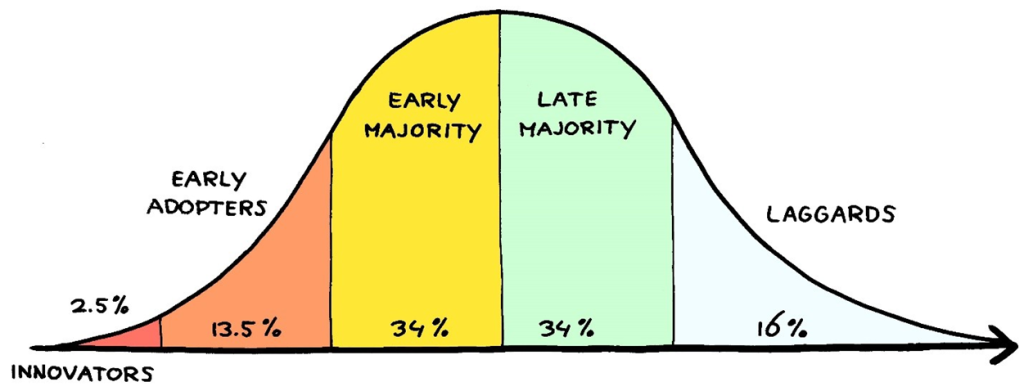
In a team of 10 or less most members would fall into either the early majority or late majority categories. You might have 1-2 early adopters and a similar number of laggards but unless your team is highly innovative you are unlikely to have any innovators. The adoption of the strategies suggested in my article is designed to shift the curve in a positive direction resulting in a higher than average number of early adopters, more early majority, less late majority and fewer laggards.
Once the change has been adopted, and also during the four phases, it’s those members on the left of the graph who have the best chance of positively influencing those on their immediate right. Thus early adopters can most influence the early majority, the early majority can best persuade the late majority and the late majority are best able to help maybe some of the laggards to get on board.
Graham Beattie,
You can visit our webiste for free tools here